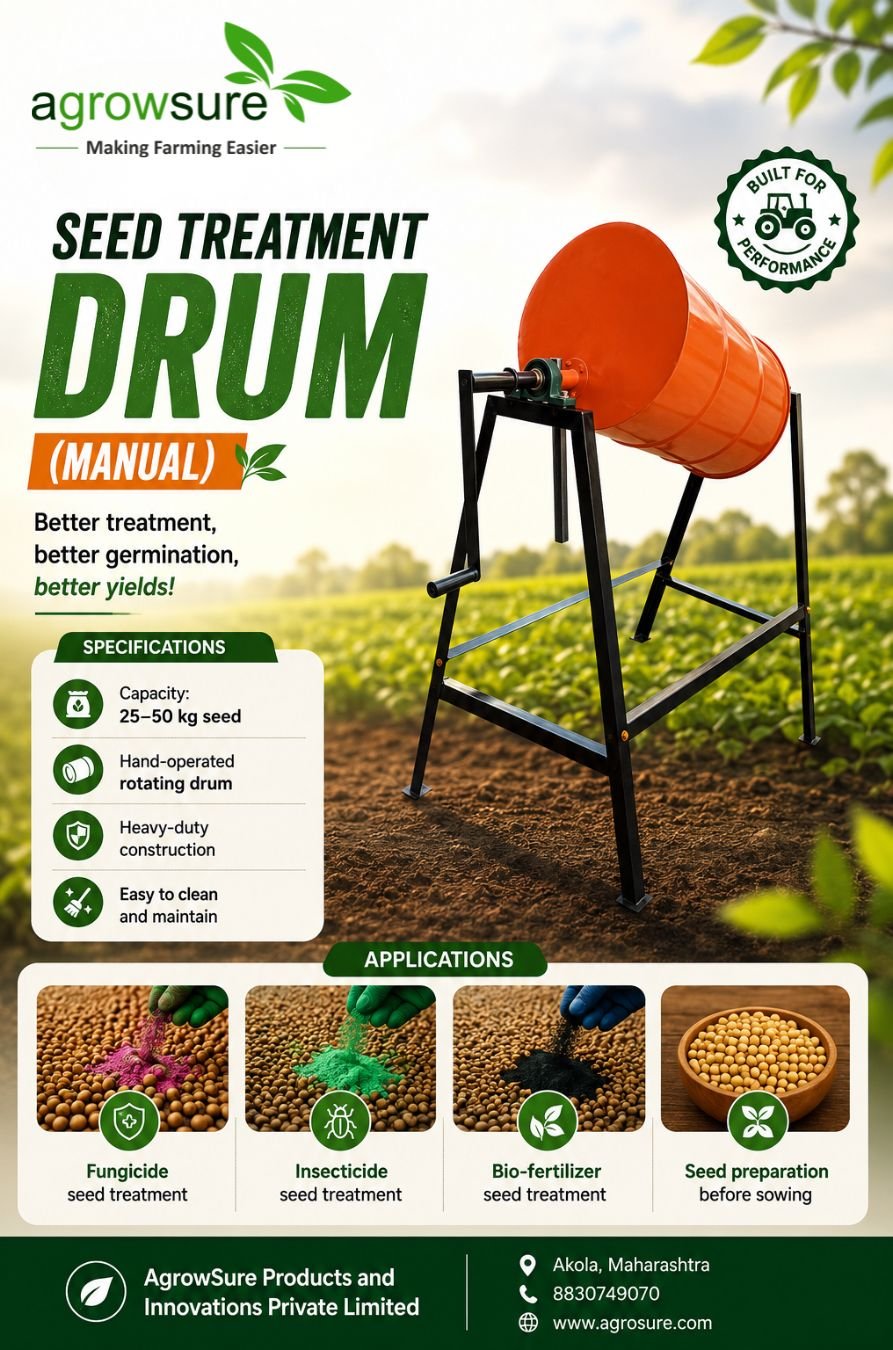
The Seed Treatment Drum (or Seed Dressing Drum) is a critical agricultural tool used for the uniform application of chemicals to seeds before sowing. This process, often referred to as seed dressing, is essential for protecting crops from pests and diseases, thereby enhancing germination rates and overall yield.
Key Features
Uniform Mixing: Internal blades or fins ensure that chemicals like fungicides or pesticides are thoroughly and evenly coated on every seed without causing damage to the seed surface.
Durable Construction: Typically built from mild steel or galvanized iron, these drums are designed to withstand demanding agricultural environments and are often corrosion-resistant.
Ergonomic Design: Most models feature a tilted cylindrical drum mounted on a sturdy tripod or four-legged frame, which facilitates easy loading and unloading.
Portability: Many manual drums include wheels, allowing a single operator to move the equipment easily around a farm
Functionality and Benefits
Operation: A measured quantity of seeds and chemicals is added to the drum. The operator then rotates the drum manually using a crank handle for about 2 to 3 minutes (roughly 20–25 revolutions) to ensure even distribution.
Efficiency: Manual drums can process between 80 kg to 200 kg of seeds per hour, significantly reducing labor and time compared to traditional hand-mixing methods.
Safety: The enclosed drum design minimizes direct physical contact with toxic chemicals, reducing health risks for farmers.
Cost-Effective: By ensuring a thorough coating, the drum minimizes chemical wastage, making it an environmentally friendly and economical choice
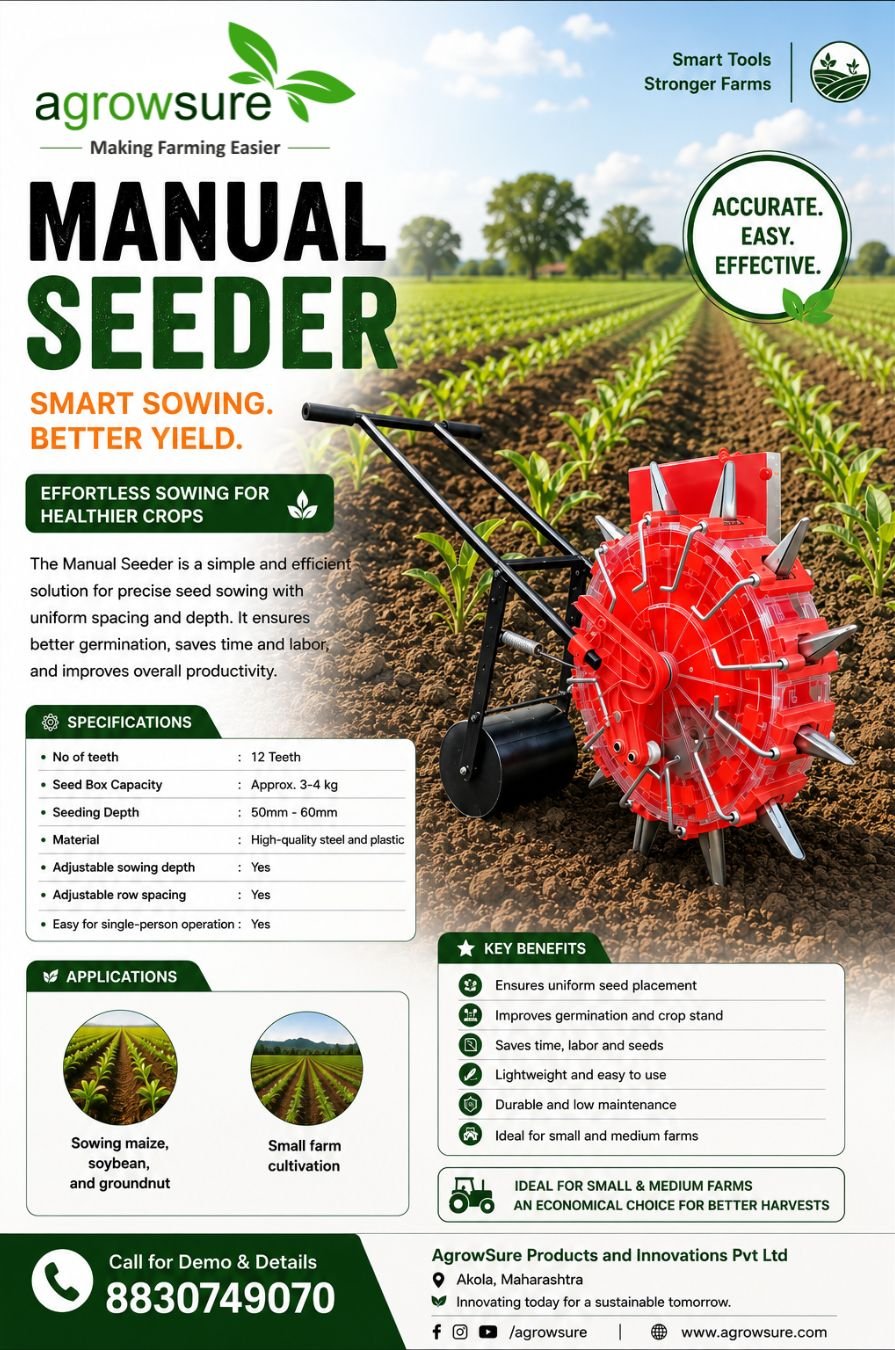
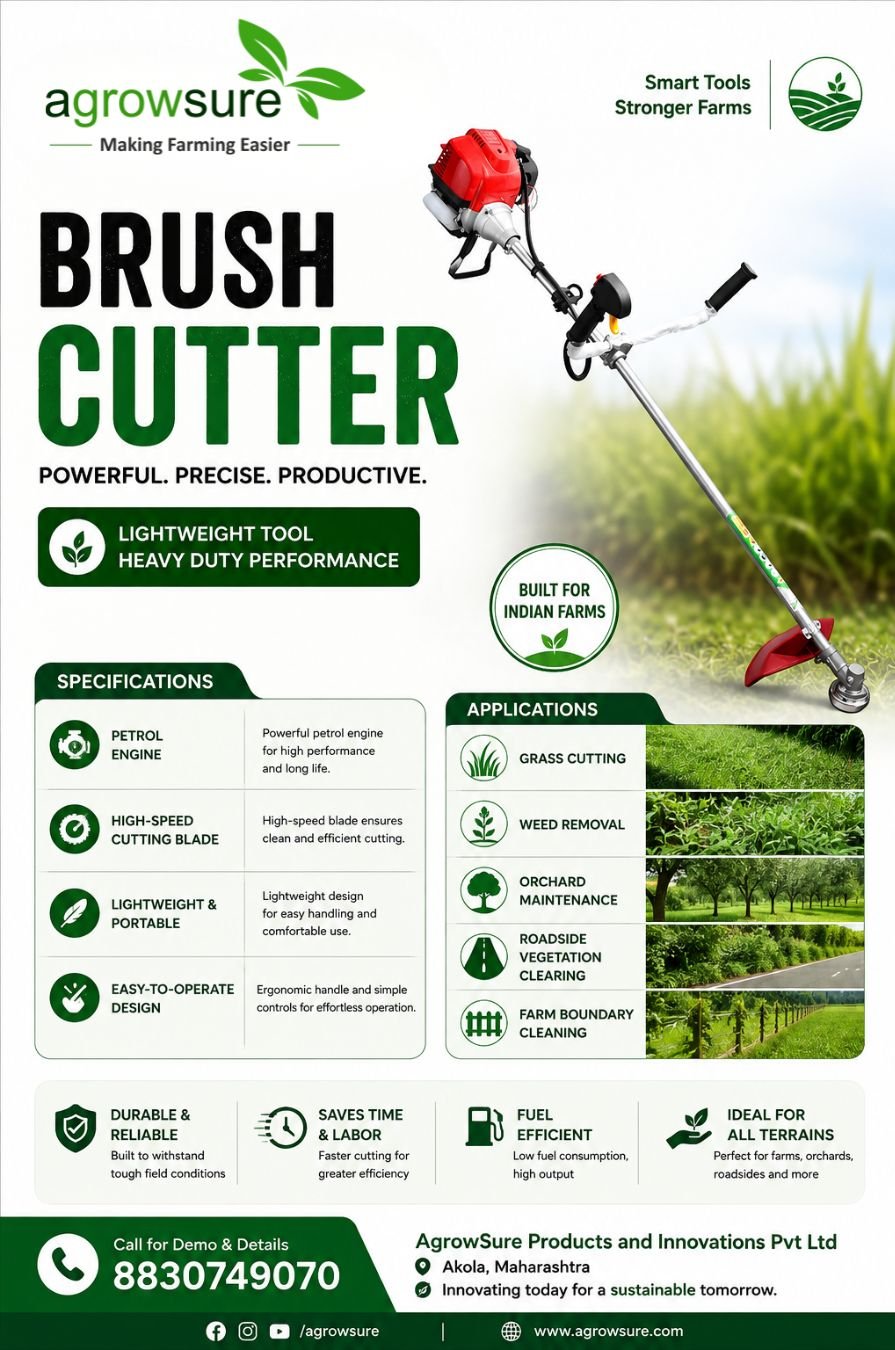
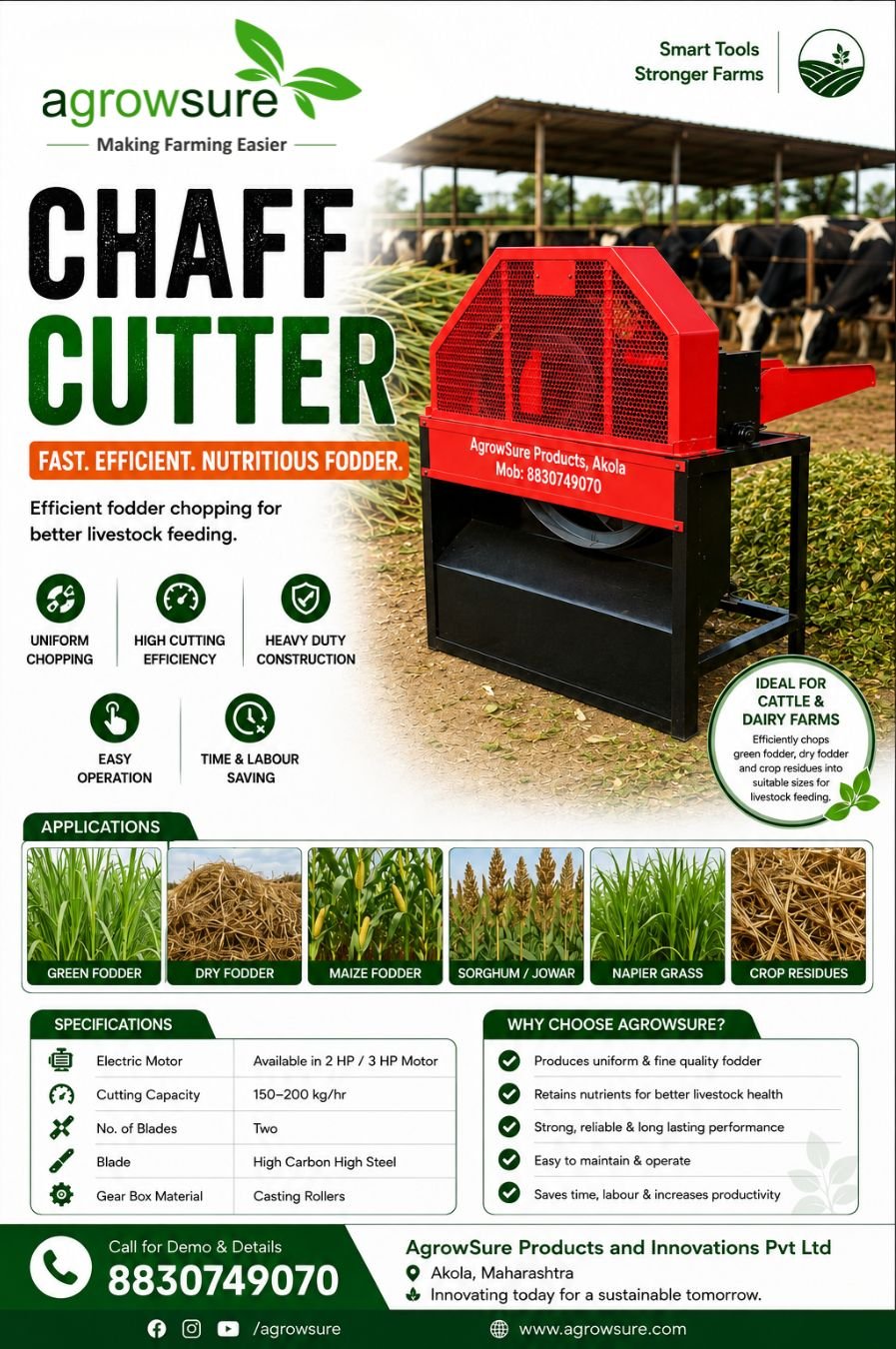
Our Unique solutions focus on designing affordable, innovative and gender friendly farm machinery, empowering small – marginal and women farmers to enance Productivity and Sustainability